What therapeutic exercise is, the six main types with examples, and how a prescribed programme rebuilds strength and mobility, from the rehab team at Relive, Vijayawada.
Therapeutic exercise is planned, structured movement prescribed to treat a specific problem: weakness after surgery, stiffness from arthritis, poor balance after a stroke, or pain that will not settle. It is the working core of almost every rehabilitation programme. This guide explains how it differs from ordinary exercise, the six main types with examples, and what a properly prescribed programme looks like in practice.
What is therapeutic exercise?
Therapeutic exercise is movement prescribed by a rehabilitation professional to restore function, reduce pain, and prevent disability. Every exercise is chosen for a clinical reason, dosed like a medicine with a set intensity, repetitions, and progression, and adjusted as the patient improves. That prescription is what separates it from general fitness training.
How it differs from regular exercise
A gym workout aims to make a healthy body fitter. Therapeutic exercise aims to return an injured or unwell body to normal function. Three differences matter:
- Assessment first. The programme starts from a clinical evaluation of strength, joint range, balance, and pain, not from a standard routine.
- Precise dosing. Load, repetitions, and rest are set to challenge healing tissue without harming it, then progressed week by week.
- Function as the goal. Success is measured in daily life: walking unaided, climbing stairs, dressing independently, returning to work.
The six main types of therapeutic exercise
1. Range-of-motion exercises
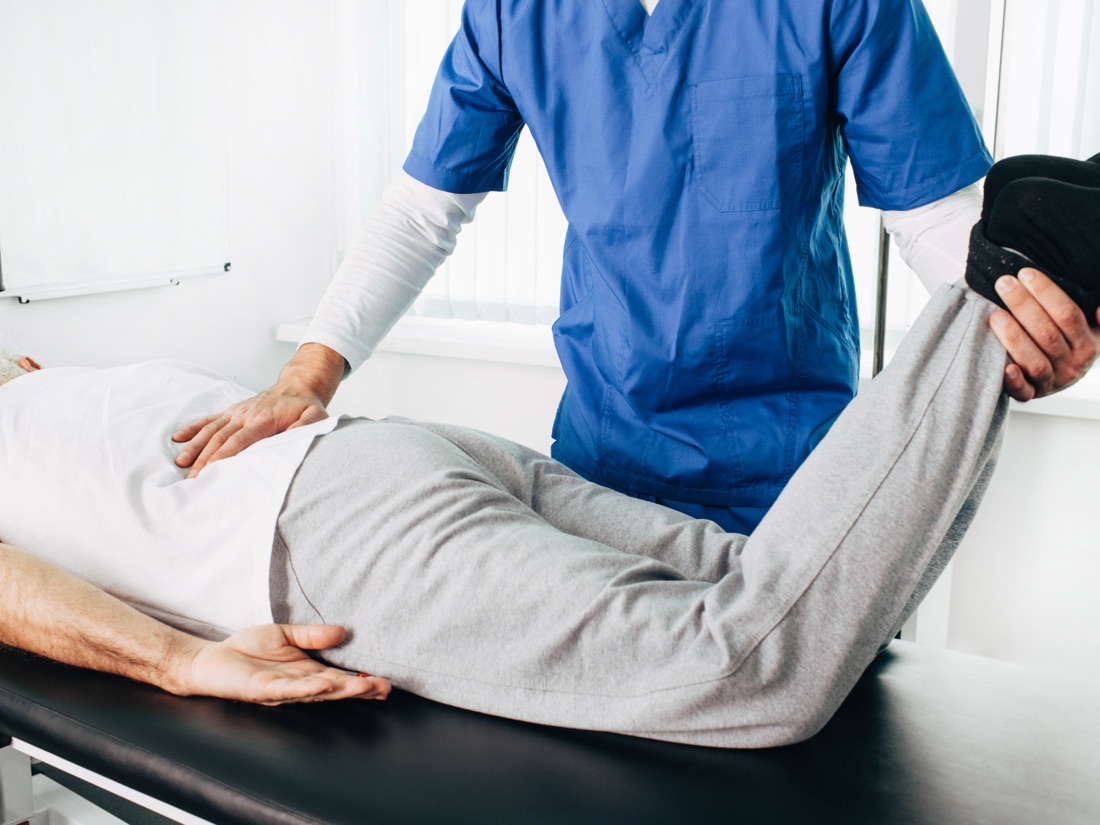
These keep joints moving through their full arc. They may be passive, where the therapist moves the limb; active-assisted, where the patient moves with help; or fully active. They are the first defence against stiffness after surgery, injury, or long bed rest.
2. Strengthening exercises
Progressive resistance work using body weight, resistance bands, light weights, or rehab equipment. Strengthening rebuilds the muscle that protects joints and powers daily activity. Our guides to knee joint strength exercises and wrist exercises for pain show what this looks like for two common problem areas.
3. Balance and coordination training
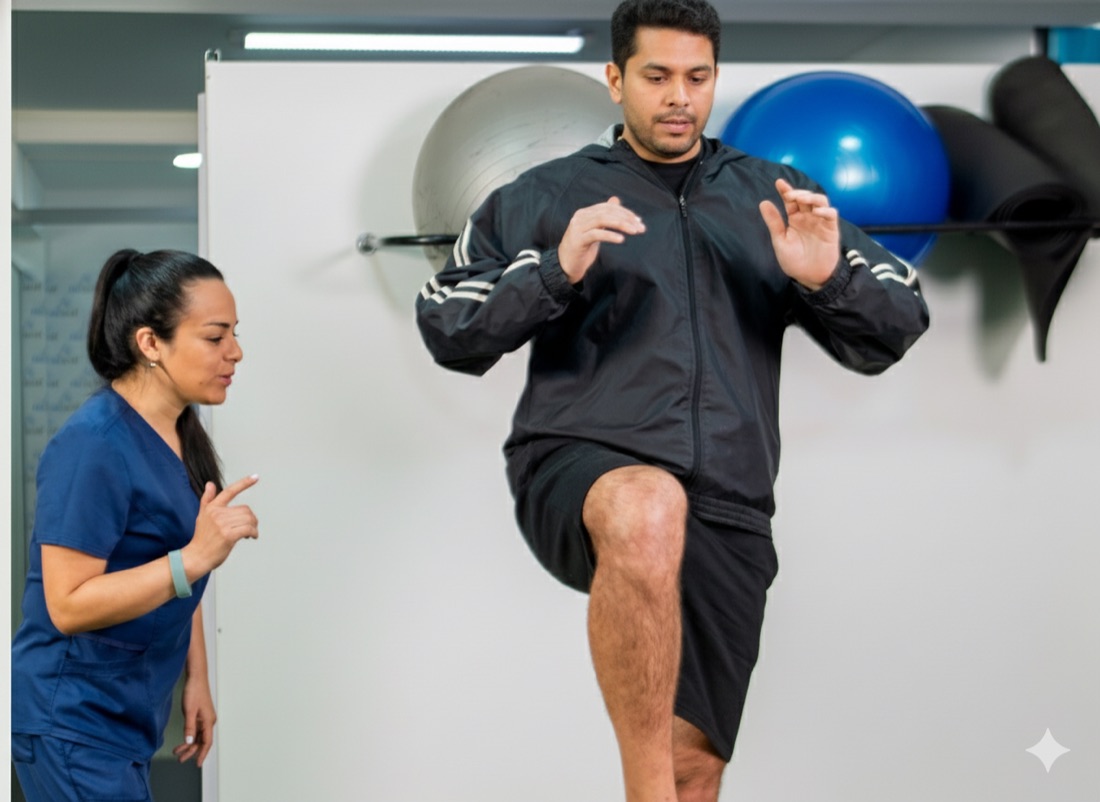
Standing-balance drills, weight shifting, and stepping practice that retrain the body's stability systems. This work is central for older adults and anyone recovering from a neurological condition, because it directly lowers the risk of falls. We cover it in depth in our guide to balance and coordination exercise.
4. Endurance and aerobic exercise
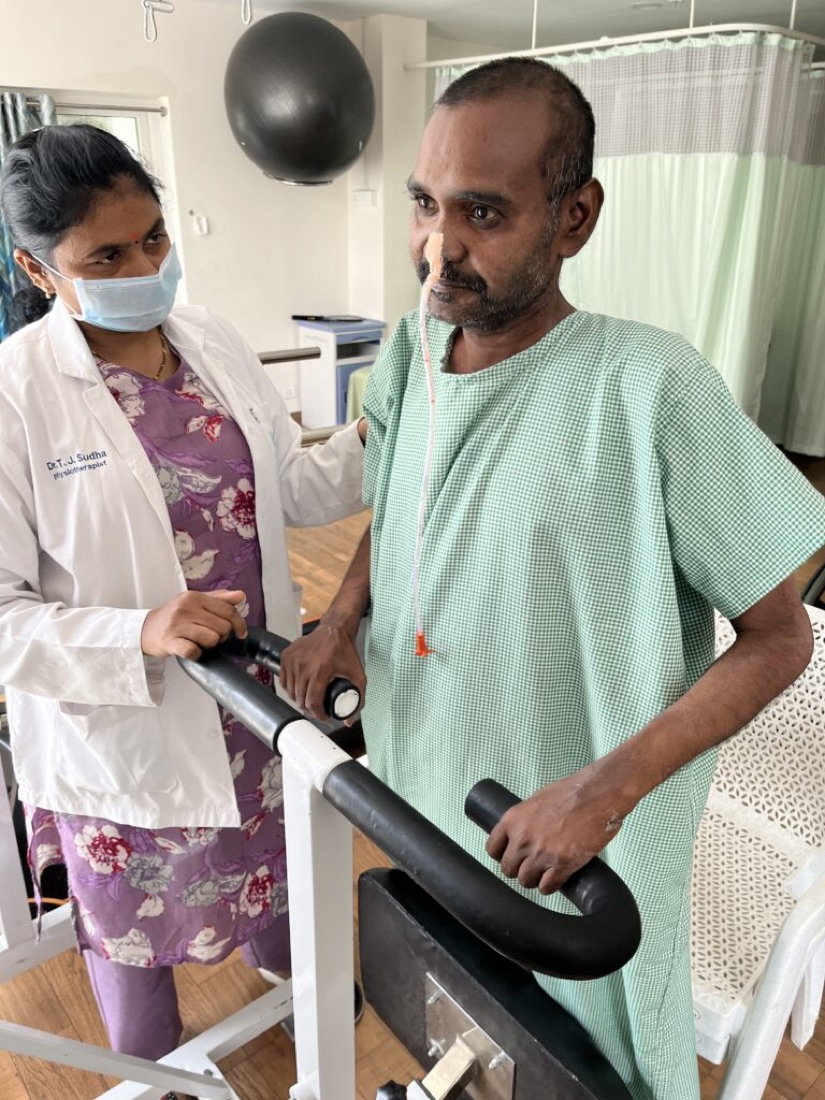
Sustained, low-impact activity such as walking programmes or pedalling a stationary cycle. It rebuilds the stamina that illness and inactivity strip away, and supports heart and lung health during recovery. A motorised leg cycle lets even patients with limited mobility train endurance safely.
5. Neuromuscular re-education
Techniques that restore the connection between brain and muscle after a stroke, brain injury, or nerve damage: task repetition, guided movement patterns, and technology such as electrical stimulation. This is the foundation of physiotherapy for stroke recovery.
6. Functional training
Practising the actual tasks a patient needs: sit-to-stand transfers, stair climbing, reaching, carrying, walking on uneven ground. Functional training turns gains in strength and balance into independence at home.
Who benefits most
Therapeutic exercise is prescribed across almost every condition we treat:
- After orthopaedic surgery, such as joint replacement or fracture fixation, to restore strength and range.
- After a stroke or brain injury, to relearn movement patterns and rebuild balance.
- With arthritis and chronic pain, where graded movement reduces pain more reliably than rest.
- In older age, to maintain muscle, bone density, and fall-free confidence.
- After long hospital stays, when weakness from bed rest affects every part of daily life.
What a programme looks like at a rehab centre
At Relive Medical Rehab Center in Vijayawada, a therapeutic exercise programme follows a clear sequence. First, a detailed assessment of strength, joint range, balance, gait, and pain. Second, a written plan with specific exercises, doses, and goals agreed with the patient and family. Third, supervised daily sessions where a physiotherapist corrects technique, progresses the load, and records results. For inpatients, exercise is woven through the day rather than confined to a single session, because frequent, short bouts of quality movement are what drive recovery.
How long until you see results?
Early wins come quickly: most patients move more freely within one to two weeks. Measurable strength gains take three to six weeks of consistent work, and durable change, the kind that survives a return home, typically takes eight to twelve weeks. Progress is reviewed formally along the way so the programme keeps pace with the patient.
When professional supervision matters
Simple stretching and walking are safe for most people. Supervision becomes important when exercise follows surgery, a stroke, a cardiac event, or a fall; when pain is worsening rather than easing; or when balance problems make solo exercise risky. In those situations an unguided routine can slow healing or cause a setback, and a prescribed programme is both safer and faster.
How Relive can help
Our physiotherapy and rehabilitation team designs therapeutic exercise programmes for orthopaedic, neurological, and geriatric recovery, delivered in a fully equipped inpatient centre. Explore our physiotherapy services, or message us on WhatsApp or get in touch to discuss a programme for yourself or a family member.
Frequently asked questions
What are examples of therapeutic exercise?
Common examples include straight-leg raises after knee surgery, resistance-band strengthening, standing-balance drills, stationary cycling for endurance, and task practice such as sit-to-stand transfers. The right examples for you depend on the condition being treated.
What is the difference between physiotherapy and therapeutic exercise?
Physiotherapy is the overall discipline, which also includes hands-on treatment, electrotherapy, and education. Therapeutic exercise is the movement component of physiotherapy, and usually the part that produces the largest long-term gains.
Can I do therapeutic exercise at home?
Yes, once a professional has assessed you and taught the programme. Most plans combine supervised sessions with daily home practice. The home part is where consistency pays off.
Is therapeutic exercise safe for older adults?
Yes, and it is strongly recommended. Programmes are dosed to the individual, so age itself is not a barrier. For older adults it is one of the most effective ways to preserve independence and prevent falls.