How physiotherapy management of stroke works stage by stage: when it should start, the techniques that rebuild movement, and a realistic recovery timeline for families.
When someone you love has a stroke, the first days are about survival. What happens in the weeks after decides how much of their life they get back. Physiotherapy management of stroke is the structured process that rebuilds movement, balance, and independence, and starting it early, at the right intensity, is the single biggest thing a family can influence. This guide walks through the stages, the techniques, and a realistic timeline, so you know what good stroke rehabilitation looks like.
Why physiotherapy is central to stroke recovery
A stroke damages part of the brain, and with it the signals that control one side of the body. The remarkable part is what happens next: the brain can rewire, building new pathways around the damage. This ability, called neuroplasticity, is driven by one thing above all: repetition of meaningful movement. That is precisely what physiotherapy delivers. Hundreds of guided, progressively harder repetitions teach healthy brain tissue to take over lost functions. Without that stimulus, weakness hardens into stiffness, joints contract, and abilities that could have returned are lost.
When should physiotherapy start?
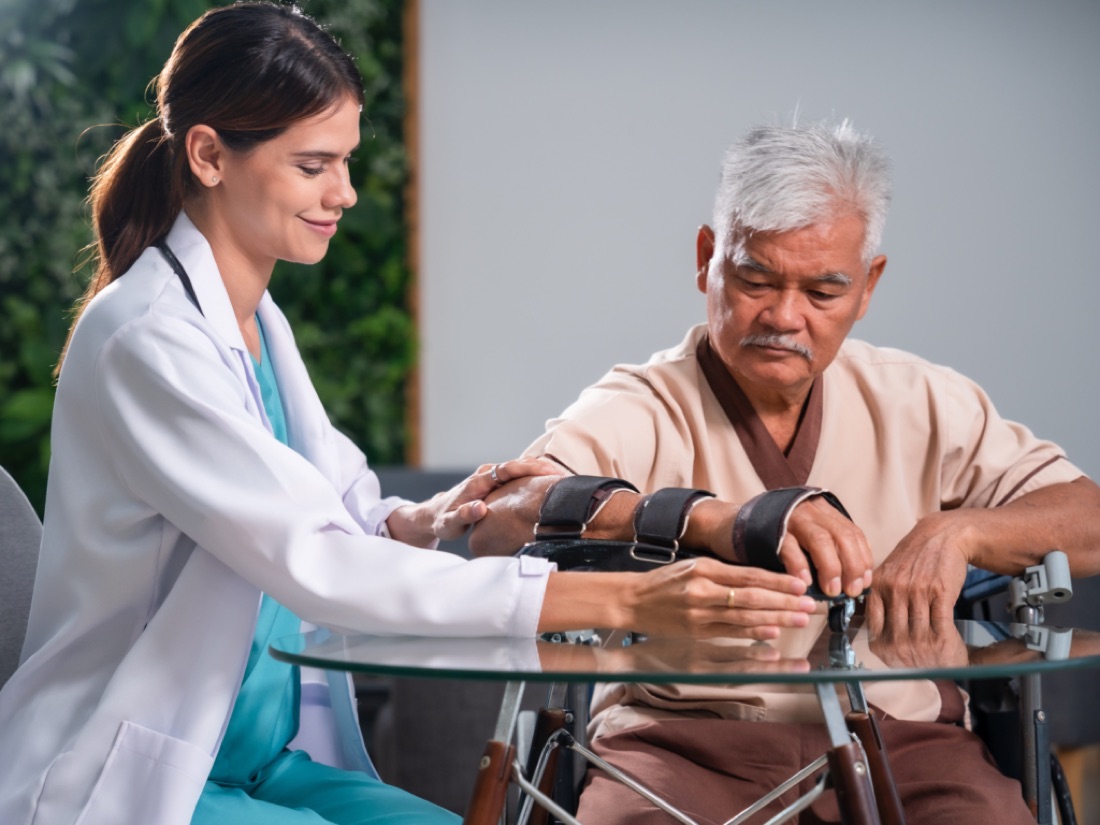
Sooner than most families expect. Once doctors confirm the patient is medically stable, usually within 24 to 48 hours, gentle work begins: positioning to protect the weak shoulder, assisted movement to keep joints supple, and early sitting practice. The first three to six months after a stroke are the period of fastest recovery, when the brain is most ready to rewire. Intensive rehabilitation during this window produces gains that are much harder to achieve later. Recovery does not stop at six months, but the early window should never be wasted on waiting.
The three stages of stroke physiotherapy
Stage 1: The acute stage (hospital, first days)
In the hospital bed, the goals are protective: preventing chest complications, pressure sores, and frozen joints, and getting the patient sitting and, where possible, standing early. Family members are taught safe positioning and how to help without injuring themselves or the patient.
Stage 2: Subacute rehabilitation (weeks 2 to 24)
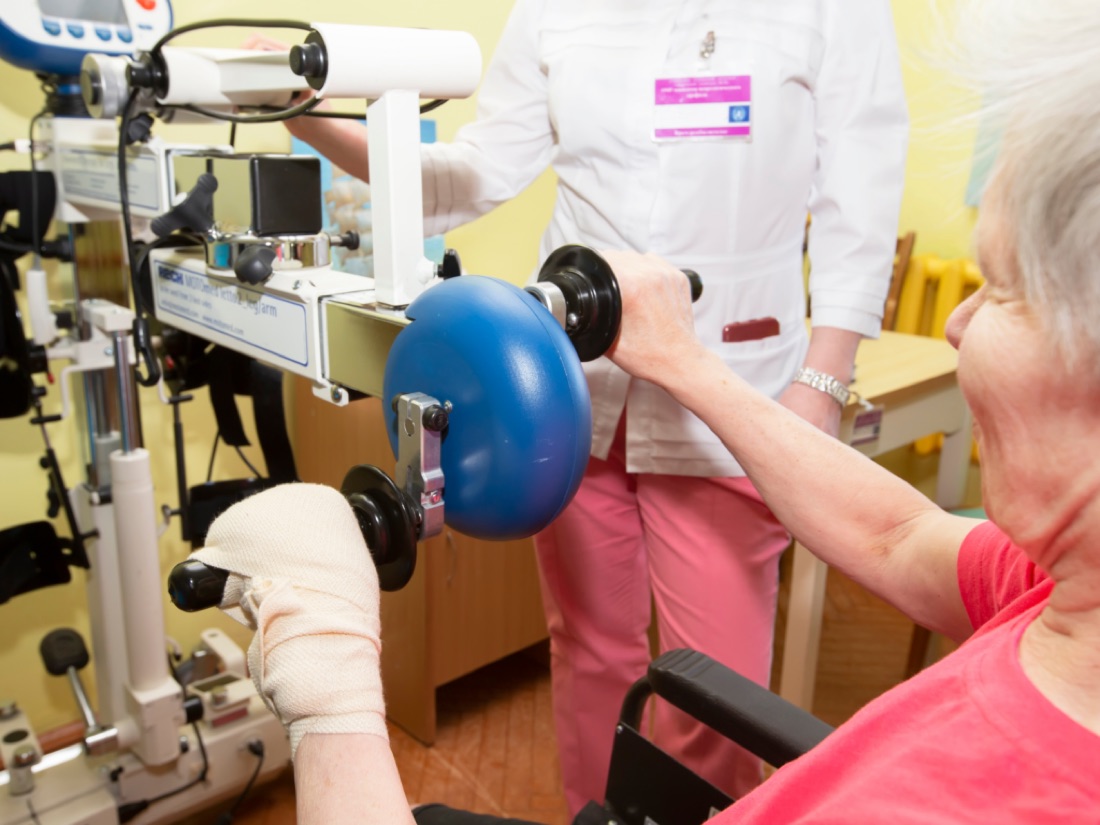
This is the engine room of recovery, and where inpatient rehabilitation earns its place. The patient works daily on sitting balance, standing, weight transfer, stepping, and walking, alongside arm and hand retraining. Therapy is dosed like medicine: assessed, progressed, and repeated every day, not once or twice a week. If you are weighing up where this stage should happen, our comparison of home-based versus inpatient stroke rehabilitation covers the decision in detail.
Stage 3: Long-term recovery (six months onward)
Gains continue for years with the right maintenance programme: community walking, stair practice, strength work, and falls prevention. Patients who keep exercising keep improving; those who stop often slide backward. This stage is where a good home programme and periodic reviews protect everything that was won earlier.
The techniques physiotherapists use
- Task-specific training. Practising the actual task, standing up, reaching, walking, hundreds of times, because repetition of real tasks is what drives neuroplasticity.
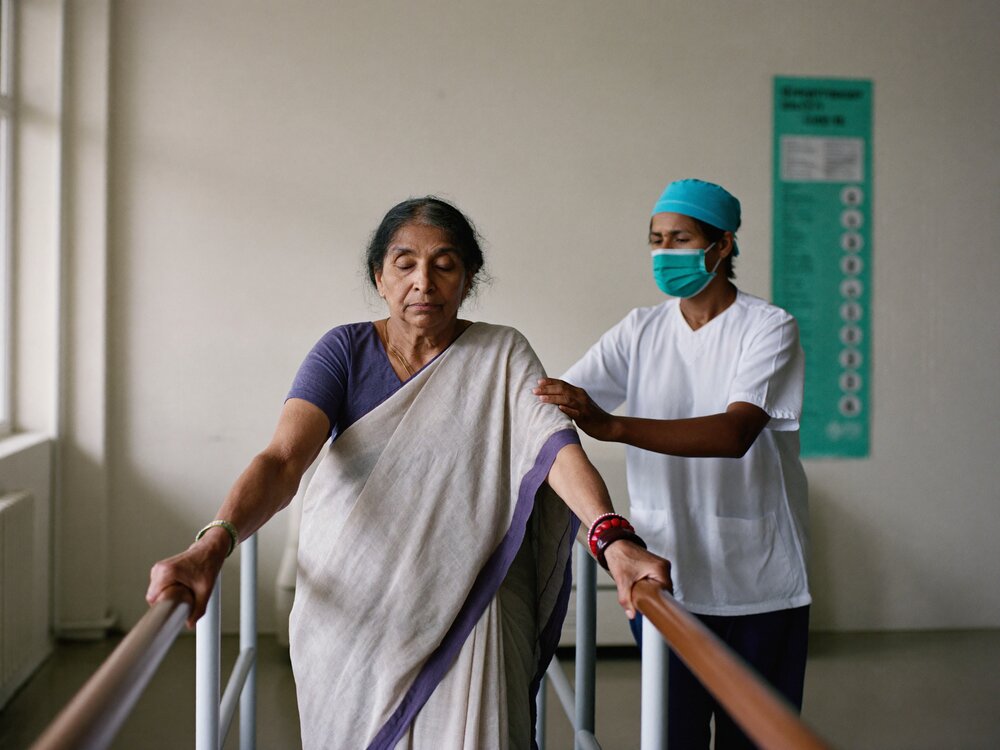
- Gait training. Relearning to walk with parallel bars, supported treadmill work, and stepping drills. Our guide to gait therapy exercises explains the progression.
- Balance retraining. Weight shifting, reaching outside the base of support, and standing on varied surfaces, building toward confident walking. See our balance and coordination exercise guide.
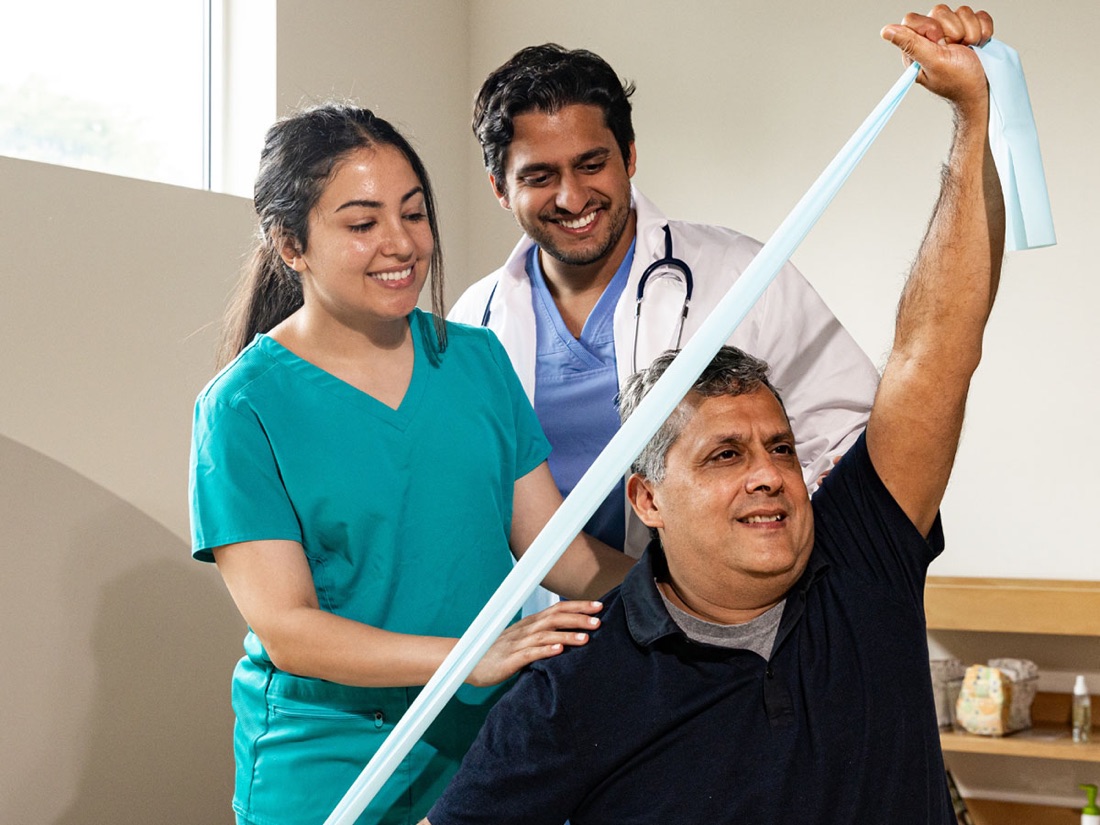
- Strengthening. Graded resistance work for the weak side and the trunk, the foundation of every functional gain.
- Neuromuscular electrical stimulation. An NMES machine can wake up muscles too weak to contract on their own, commonly used for the wrist and for drop foot.
- Constraint-induced movement therapy. Encouraging use of the affected arm by limiting the strong one during practice sessions.
- Family training. Teaching caregivers safe transfers, home exercises, and what to expect, so recovery continues between and after sessions.
A realistic recovery timeline
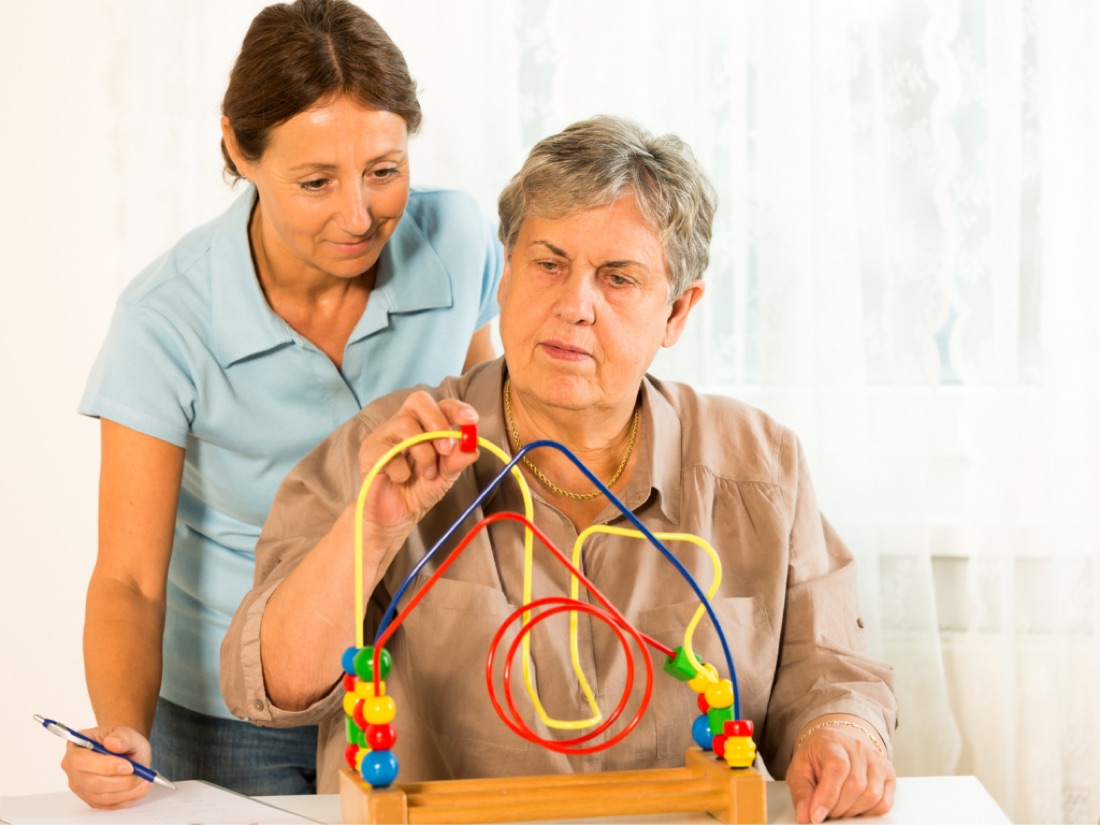
Every stroke is different, so honest ranges help more than promises. Broadly: sitting balance often returns within the first two to four weeks; supported standing and stepping follow in weeks four to twelve; many patients walk with an aid by month three to six. Arm and hand recovery is slower and less predictable than leg recovery. Speech, swallowing, and thinking follow their own timelines with their own therapists. Progress comes in steps rather than a straight line, and plateaus do not mean recovery is over; they usually mean the programme needs adjusting.
What families can do
- Push for rehabilitation to start early, and ask for a written plan with goals.
- Choose intensity: daily therapy in the early months beats occasional sessions.
- Learn the home exercises and make them part of the daily routine.
- Watch mood. Depression after stroke is common and treatable, and it directly affects recovery effort.
- Keep follow-up appointments even when progress feels slow.
How Relive can help
Stroke rehabilitation is the core of what we do at Relive Medical Rehab Center in Vijayawada. As a NABH-accredited inpatient centre, we provide daily physiotherapy built on therapeutic exercise, gait and balance retraining, NMES, and structured family training, with doctors and nurses on site throughout. Many of our families are arranging care for a parent from another city or from abroad; message us on WhatsApp and we will guide you through the admission process, or get in touch here.
Frequently asked questions
How soon after a stroke should physiotherapy start?
As soon as the patient is medically stable, often within 24 to 48 hours. Early movement prevents complications, and the first three to six months are the window of fastest recovery, so early intensive rehabilitation matters enormously.
Can a stroke patient recover fully with physiotherapy?
Some do, especially after milder strokes with early rehabilitation. Others regain most daily independence with some lasting weakness. The degree of recovery depends on the stroke's severity, the patient's health, and, critically, the intensity and consistency of rehabilitation.
Does physiotherapy still help one or two years after a stroke?
Yes. The fastest gains come early, but studies and daily clinical experience show patients improving strength, balance, and walking years after a stroke when they train consistently. It is never too late to be assessed.
How many hours of physiotherapy does a stroke patient need?
In the subacute stage, aim for at least one to two focused hours daily, spread through the day, plus practice built into routine activities. This is the main advantage of inpatient rehabilitation: therapy happens every day, at the dose the brain needs.