A plain-language guide to the NMES machine: how neuromuscular electrical stimulation rebuilds weak muscle, how it differs from TENS, and when physiotherapists prescribe it.
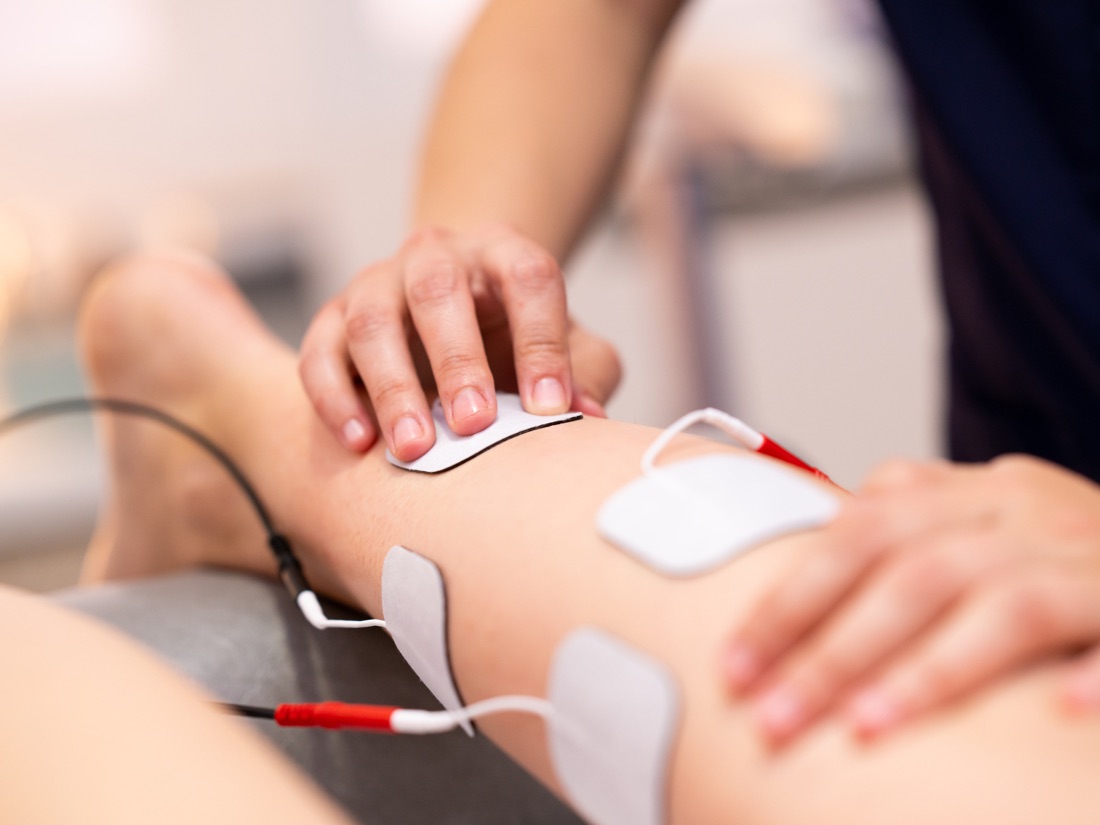
An NMES machine, short for neuromuscular electrical stimulation, is a device physiotherapists use to make weak muscles contract when a patient cannot yet contract them strongly on their own. Small adhesive electrodes are placed on the skin over a muscle, and gentle electrical pulses trigger a controlled contraction. Used well, it protects muscle after surgery or a stroke and speeds the return of voluntary strength. This guide explains how it works, how it differs from TENS, who it helps, and what a session actually feels like.
What is an NMES machine?
NMES stands for neuromuscular electrical stimulation. The machine generates low-level electrical pulses that travel through skin electrodes to the nerves supplying a muscle. When the pulse arrives, the muscle contracts, holds briefly, and relaxes, in cycles set by the therapist. The contraction is real muscle work, which is why NMES can slow wasting and rebuild strength even when a patient cannot exercise normally.
How does NMES work?
Normally, your brain sends an electrical signal down a nerve to make a muscle contract. After a stroke, surgery, or a long period of bed rest, that pathway can be too weak to produce a useful contraction. NMES supplies the signal externally. Repeated, well-timed contractions do three things:
- Preserve muscle bulk that would otherwise waste away during immobility.
- Re-educate the nerve-muscle connection, reminding the body how a proper contraction feels.
- Build strength progressively, because the contraction can be dosed and repeated like any other exercise.
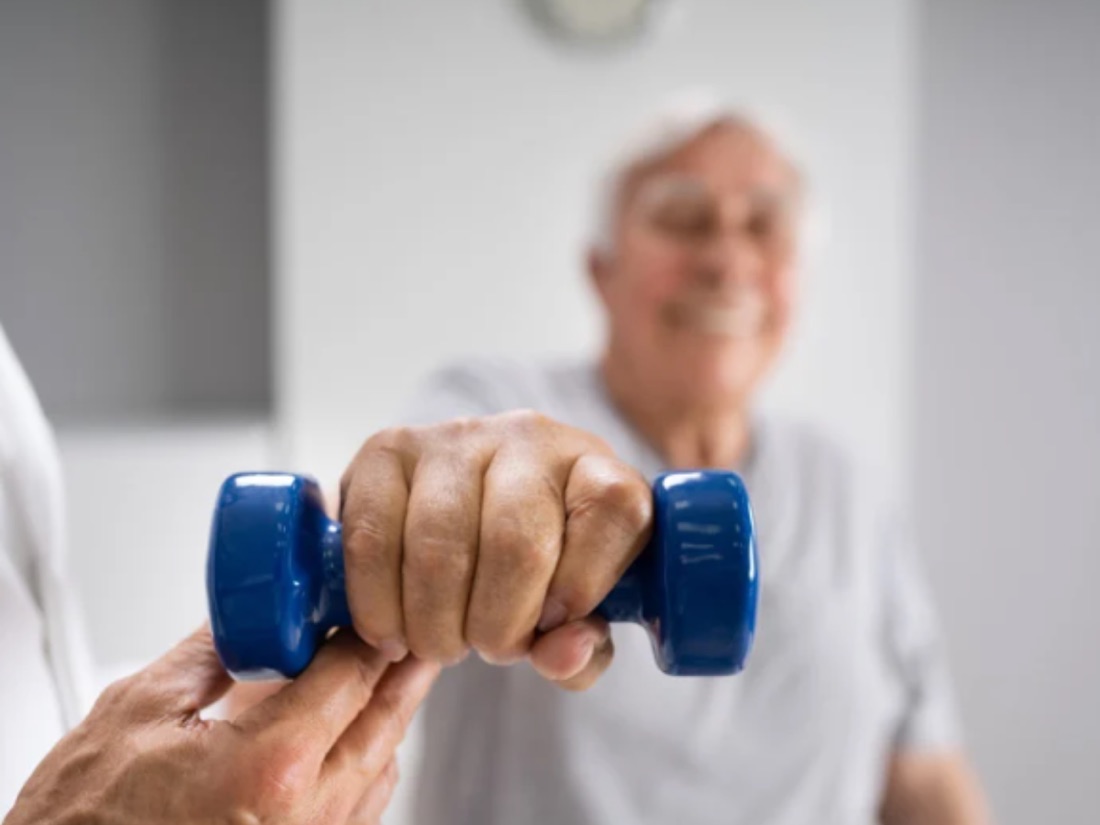
The biggest gains come when stimulation is paired with the patient's own effort, contracting the muscle along with the machine, and combined with a proper programme of therapeutic exercise. NMES supports active rehabilitation; it does not replace it.
NMES vs TENS: what is the difference?
The two machines look similar and are often confused. The difference is the target. A TENS unit stimulates sensory nerves to dampen pain signals; it does not aim to contract muscle. An NMES machine stimulates motor nerves specifically to produce muscle contractions and rebuild strength. In short: TENS is for pain relief, NMES is for muscle recovery. Many rehabilitation plans use both, for different reasons, at different times.
What is NMES used for?
Physiotherapists prescribe NMES in a defined set of situations:
- Stroke recovery. Waking up a weakened arm, wrist, or ankle and supporting the retraining of movement, alongside stroke physiotherapy. A common example is stimulating the muscles that lift the foot, to help with drop foot.
- After orthopaedic surgery. Rebuilding the thigh muscle that switches off after knee replacement or ligament repair.
- After prolonged bed rest. Limiting the muscle loss that follows ICU stays and long illness, so patients start rehab from a stronger base.
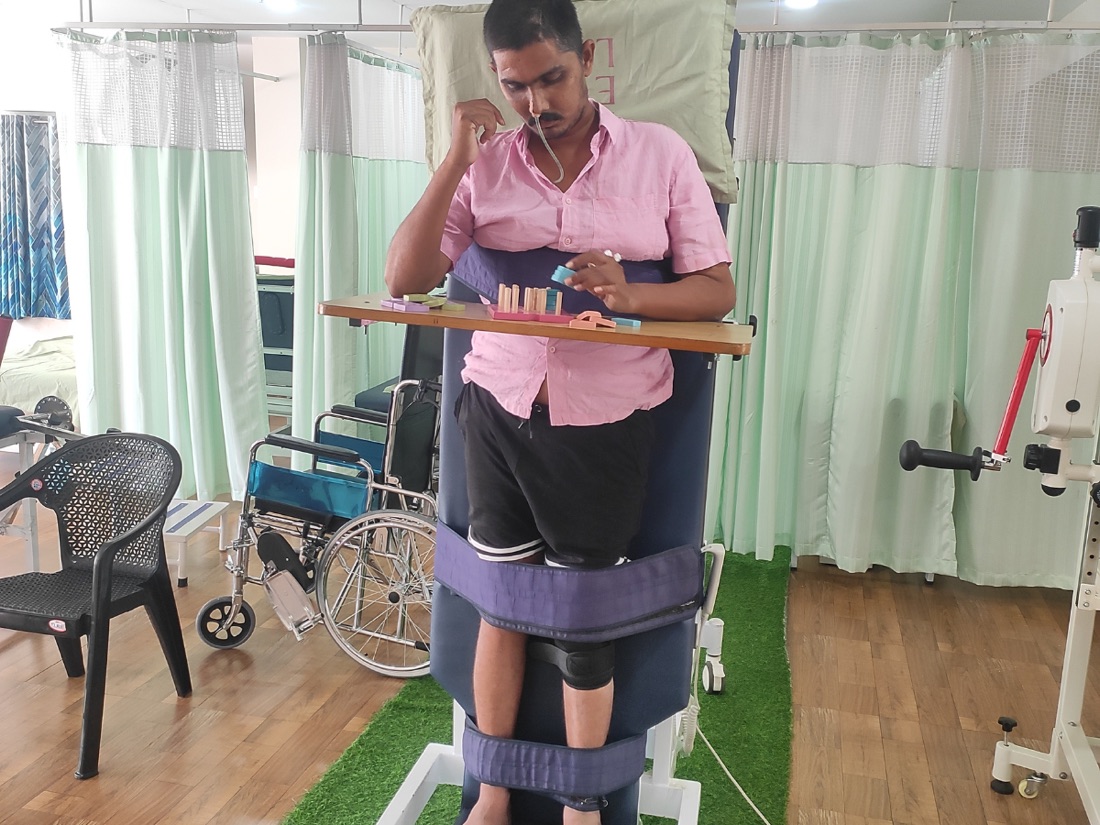
- Spinal cord injury. Maintaining muscle condition and supporting circulation in paralysed limbs.
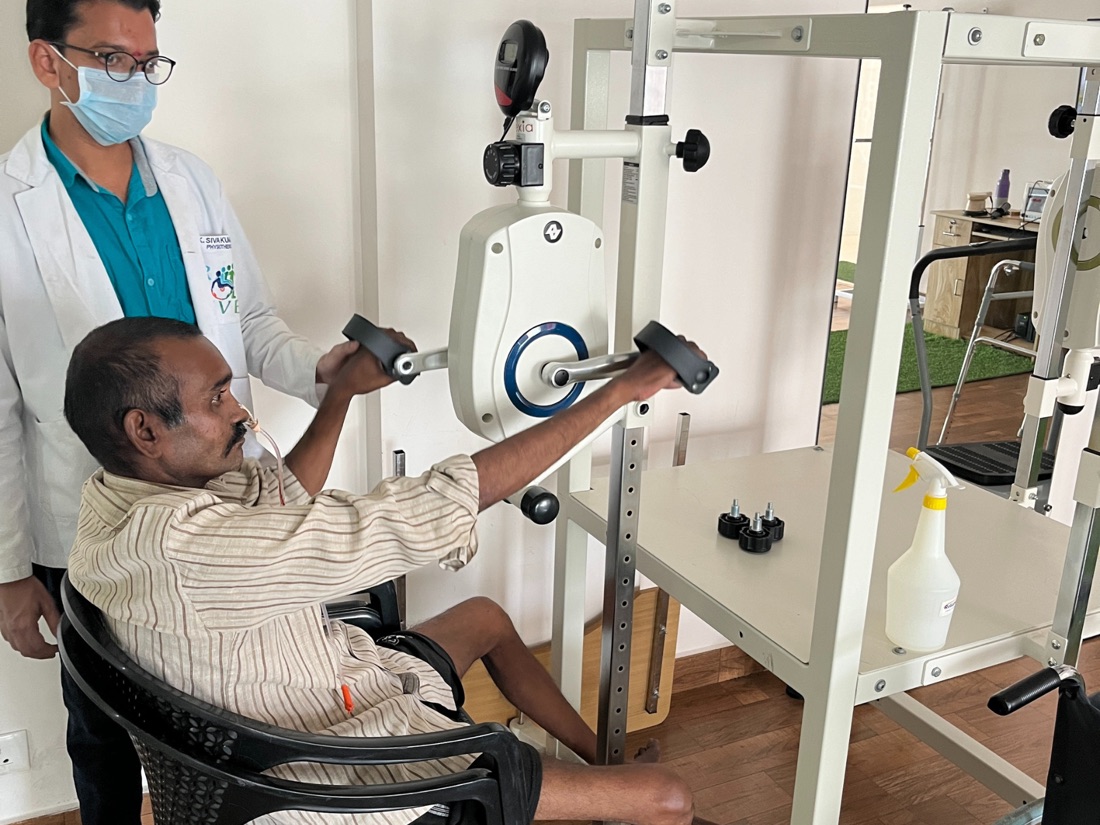
- Severe deconditioning, where a patient is too weak to exercise effectively; NMES bridges the gap until active work, such as leg cycle exercise, becomes possible.
What does a session feel like?
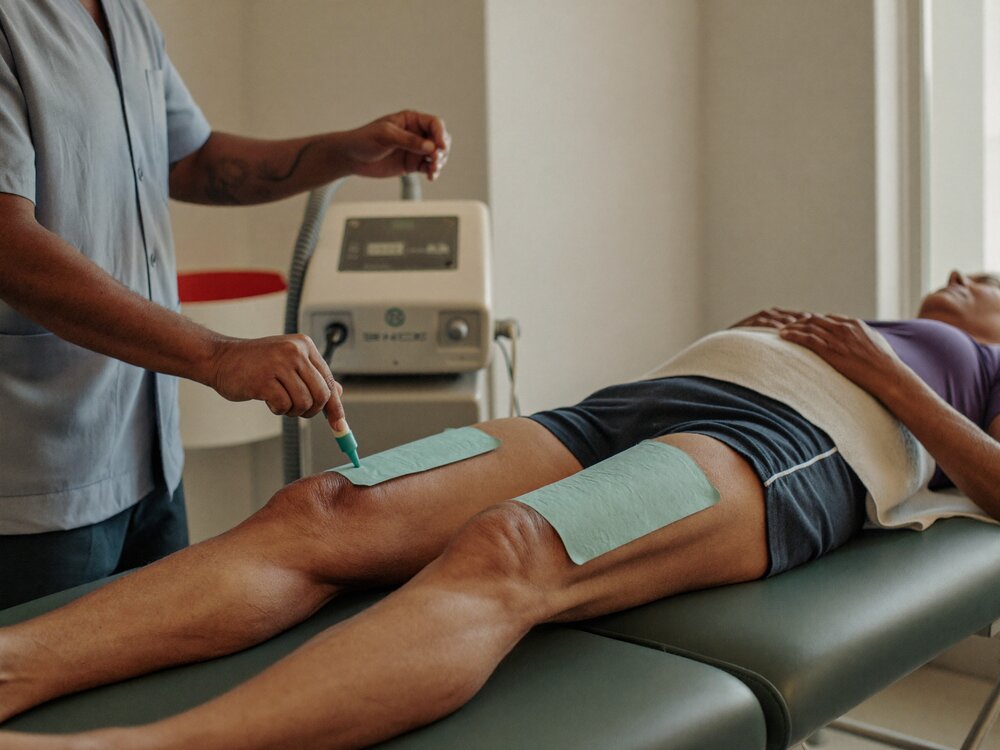
The therapist places electrodes over the target muscle, then raises the intensity slowly. You feel a tingling that builds into a firm, deep squeeze as the muscle contracts, holds for a few seconds, and releases. It should feel strange at first but not painful; the therapist adjusts the settings until the contraction is strong yet comfortable. A typical session runs 15 to 30 minutes, several times a week, with the muscle worked in sets much like gym training.
Is NMES safe? Who should avoid it?
In trained hands NMES is very safe. The main precautions are:
- People with a pacemaker or implanted defibrillator should not receive NMES without cardiology clearance.
- It is not applied over broken or infected skin, active cancer sites, or areas with deep vein thrombosis.
- Caution applies in pregnancy and uncontrolled epilepsy.
- Skin under the electrodes is checked after each session, especially where sensation is reduced.
This is why an assessment comes first, and why home use is best set up by a professional who selects the placement and dose for your specific problem.
How Relive uses NMES
At Relive Medical Rehab Center in Vijayawada, NMES is one tool inside a complete programme. Our physiotherapists combine it with hands-on treatment, supervised strengthening, gait training, and occupational therapy, and progress the settings as your own strength returns. Explore our physiotherapy services, message us on WhatsApp, or get in touch to ask whether NMES belongs in your recovery plan.
Frequently asked questions
Does an NMES machine really build muscle?
Yes, within limits. NMES produces genuine contractions that slow wasting and rebuild strength in weakened muscle, which is exactly the situation after surgery, stroke, or bed rest. In healthy, active muscle it adds little beyond normal training, so its value is greatest early in recovery.
Is NMES painful?
No. You feel tingling and then a strong squeeze as the muscle contracts. The intensity is raised only to the level that produces a good contraction comfortably, and you remain in control throughout the session.
Can I use an NMES machine at home?
Home units exist and can be useful between sessions, but placement, settings, and dosage decide whether they help. Have a physiotherapist assess you, set the programme, and teach you electrode placement before using one on your own.
How many NMES sessions are needed to see results?
Most patients notice firmer, more responsive muscle within two to three weeks of regular sessions. Meaningful strength change typically takes four to six weeks, always alongside active exercise rather than instead of it.