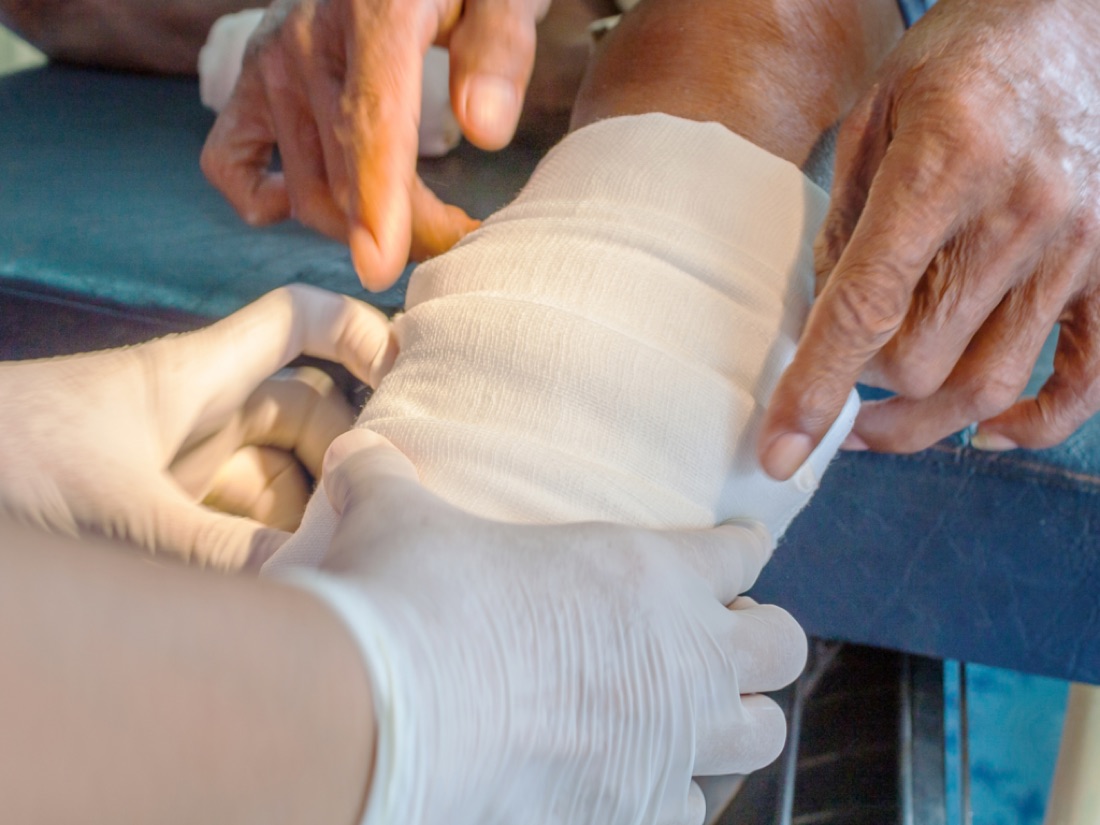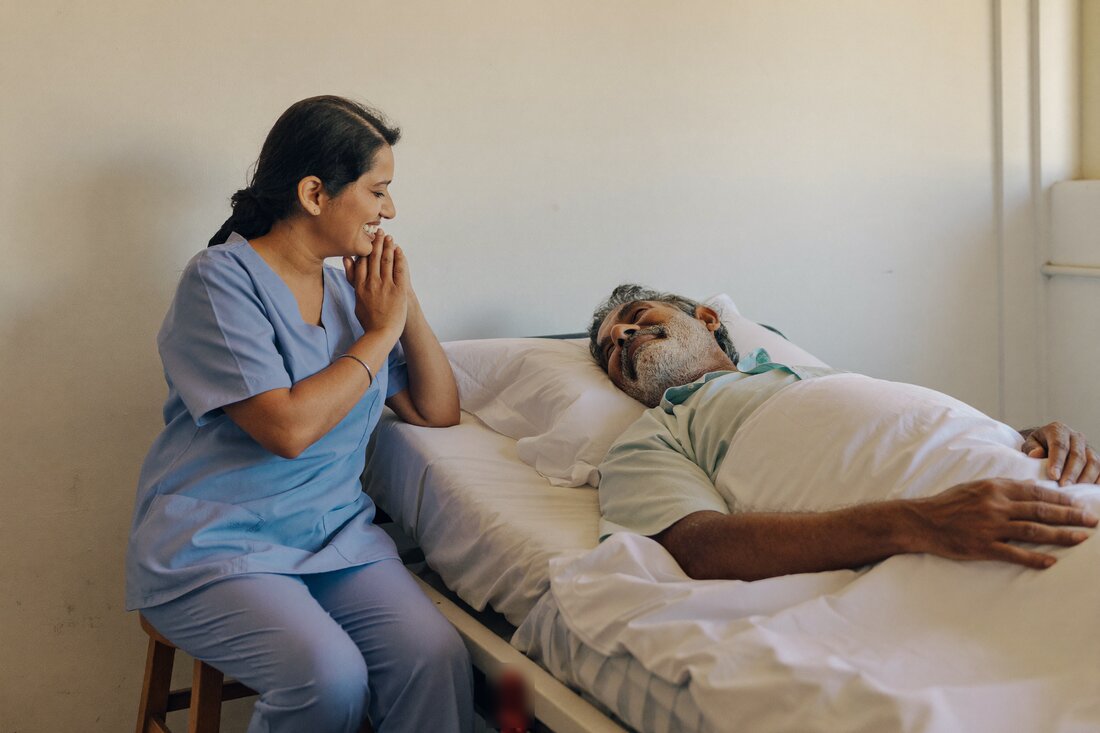
A practical guide for families caring for a bedridden parent at home: how bed sores form, the seven steps that prevent them, and the warning signs that need urgent help.
If you are caring for a bedridden parent at home, learning how to prevent bed sores in bedridden patients is one of the most useful things you can do. Pressure sores are painful, they are slow to heal, and in older or weakened patients they can turn into a serious infection. The reassuring part is that most are preventable, and prevention costs almost nothing beyond attention and a routine the whole family can share.
What are bed sores and why do they form?
A bed sore, also called a pressure sore or pressure ulcer, is skin and tissue damage caused by unrelieved pressure. When a patient lies in one position, their body weight presses the skin against the bone underneath and squeezes the tiny blood vessels shut. Without blood, the tissue starts to starve. Damage can begin within two to four hours in a frail patient, which is why the clock matters so much.
Two other forces make it worse. Friction is the skin rubbing against the sheet. Shear is what happens when a patient slides down the bed and the skin stays put while the bone moves underneath, tearing the tissue between them. Both are common when families drag a patient up the bed rather than lifting.
Who is most at risk
- Anyone who cannot reposition themselves: after a stroke, spinal injury, advanced Parkinson's disease, or major surgery.
- Patients with reduced sensation, who cannot feel the discomfort that would normally make them shift.
- Patients who are underweight, poorly nourished, or dehydrated.
- Patients with diabetes or poor circulation, which is a very common combination in Andhra Pradesh.
- Anyone with incontinence, because constantly damp skin breaks down far faster.
Where bed sores usually start
Check the bony points, because that is where pressure concentrates. On the back: the tailbone and lower spine, shoulder blades, elbows, and the back of the head. On the side: the hip bone, the outer knee, the ankle, and the ear. And the heels, which are the second most common site after the tailbone and the one families forget most often.
Seven steps that prevent bed sores
1. Reposition every two hours, day and night
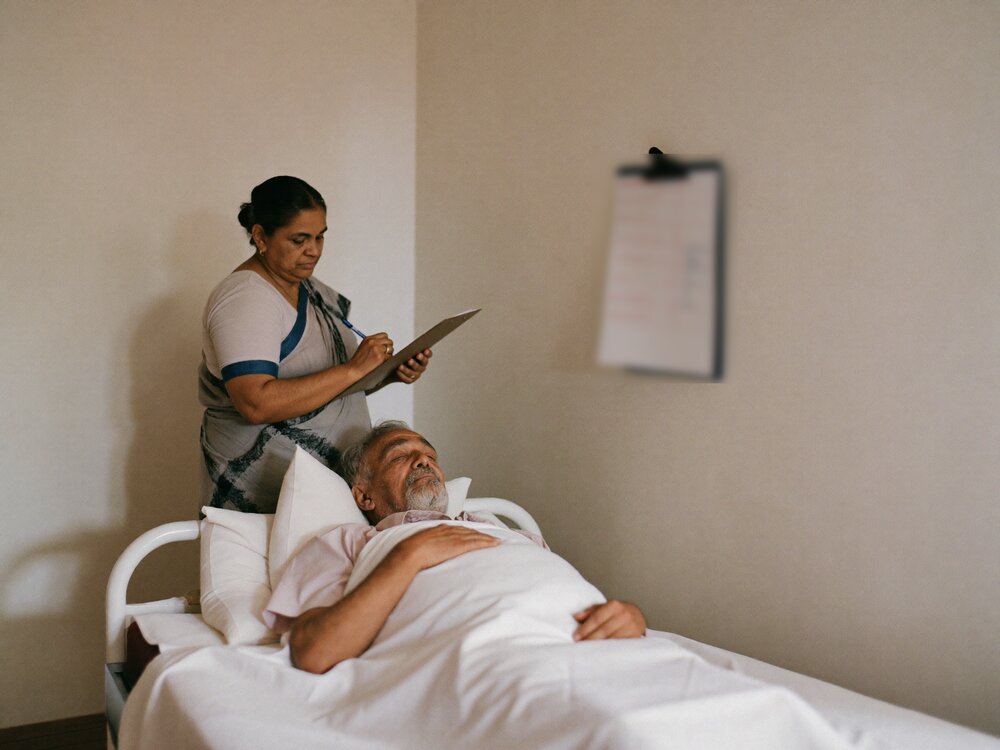
This is the single most important habit. Set a repeating alarm and keep a simple turning chart on the wall so everyone in the house knows when the last turn happened and which side is next. Nights are when the routine slips, so agree who is responsible before bedtime.
2. Use a tilt, not a full roll onto the side
Rolling a patient fully onto their side puts the whole body weight on one hip bone. Instead, tilt them about 30 degrees, propped with a pillow behind the back, so the weight rests on the fleshy part of the buttock rather than the bone. Place another pillow between the knees and ankles so the bony points do not press against each other.
3. Float the heels
Heels have almost no padding and a poor blood supply. Place a pillow lengthwise under the calves so the heels lift clear of the mattress entirely. Do not put a pillow directly under the heel, which just moves the pressure point.
4. Keep the head of the bed low
Sitting a patient up steeply makes them slide down, which creates shear at the tailbone. Where medically possible, keep the head of the bed at 30 degrees or less, and raise the knee support slightly so the body does not slip. If they must sit upright to eat, lower the bed again afterwards.
5. Keep skin clean, dry, and moisturised
Wash with lukewarm water and a mild soap, then pat dry rather than rubbing. Apply a simple moisturiser to dry skin. If there is incontinence, change promptly and use a barrier cream to protect the skin. In the summer heat, check for sweat trapped under the back and use light cotton bedding rather than plastic sheeting.
6. Inspect the skin twice every day
During the morning wash and again in the evening, look at every bony point. Press gently on any red patch. If the redness turns white and then returns, circulation is still working. If the redness does not blanch when pressed, that is an early pressure injury and that area must be kept completely off pressure from that moment.
7. Get food and fluids right
Skin cannot repair itself without protein, and dehydrated skin tears easily. Include protein at each meal within whatever the doctor has advised, such as dal, curd, eggs, paneer, or fish, and keep fluids going through the day. A patient who is eating poorly is a patient whose skin is losing its defences, so mention it to the treating doctor rather than waiting.
Common mistakes that make things worse
- Massaging a red area. This was once standard advice and it is now known to damage already injured tissue. Relieve pressure instead.
- Ring or donut cushions. They concentrate pressure in a circle around the wound and reduce blood flow to the middle.
- Dragging the patient up the bed. Always lift with a draw sheet and two people, never drag.
- Talcum powder on damp skin. It cakes and abrades. Use a barrier cream instead.
- Assuming a good mattress is enough. A pressure-redistributing mattress genuinely helps, but it reduces the risk rather than removing it. Turning still matters.
Warning signs that need medical help
Contact a doctor or nurse promptly if you see any of these:
- Redness that does not turn white when you press it.
- Any break in the skin, blister, or open area, however small.
- Skin that has turned purple, black, or leathery.
- Pus, a foul smell, or fluid coming from the area.
- Spreading redness, warmth, or swelling around the site.
- Fever, confusion, or a sudden change in alertness, which can signal that infection has spread and needs urgent attention.
A small sore treated early usually heals. The same sore left for two weeks can reach the muscle or bone and take months.
When home care is not enough
Families manage prevention at home very well when someone is available around the clock. It becomes much harder when the patient is heavy to turn, when a sore has already formed, when there is incontinence alongside diabetes, or when one person is doing everything alone and cannot sustain two-hourly turns at night. At that point an inpatient setting with trained nursing, pressure-relieving equipment, and structured wound therapy is not a failure of family care. It is usually what stops a manageable problem becoming a dangerous one.
It is also worth remembering that the long-term answer to pressure sores is movement. Every gain in mobility, whether that is sitting up unaided, transferring to a chair, or taking a few supported steps, removes hours of pressure from the skin. That is why prevention and therapeutic exercise belong in the same plan, and why geriatric rehabilitation matters even for patients who currently cannot move at all.
How Relive can help
At Relive Medical Rehab Center in Vijayawada, pressure sore prevention is part of daily nursing for every bedridden patient, alongside long-term care and specialist wound management when a sore has already developed. We also train families, because most of our patients eventually go home and the routine has to travel with them. Many of our enquiries come from sons and daughters living in another city or abroad; our guide to arranging inpatient rehab for a parent explains how that works from a distance. Message us on WhatsApp with a description of the situation, or get in touch here, and we will tell you honestly what level of care is needed. You can also read more about our physiotherapy services.
Frequently asked questions
How often should a bedridden patient be turned?
Every two hours as a general rule, through the night as well as the day. Patients who are very frail, poorly nourished, or already showing redness may need turning more often. If a red mark is still visible two hours after relieving the pressure, the interval is too long for that patient.
How quickly can bed sores develop?
Faster than most families expect. Tissue damage can begin within two to four hours of unrelieved pressure in a frail patient, and the first visible sign is often only a patch of redness. This is why prevention has to start on day one of bed rest rather than after the first sore appears.
Can bed sores heal at home?
Very early pressure damage, where the skin is still intact, usually settles at home once pressure is fully removed from that area. Once the skin has broken, healing needs proper assessment, dressings, nutrition support, and consistent pressure relief. Deep or infected sores should be managed under professional care rather than treated with home remedies.
Does a water bed or air mattress prevent bed sores completely?
No. A pressure-redistributing air or foam mattress meaningfully lowers the risk and is worth having for any patient who cannot move themselves, but no surface removes the need for repositioning, skin checks, and good nutrition. Treat the mattress as one part of the routine, not a replacement for it.